Discover a different side of Pelister National Park on a hiking trail that combines spectacular mountain landscapes with the rich spiritual and cultural heritage of the villages on the slopes of Pelister.
The Churches and Monasteries of Pelister trail takes hikers through Trnovo, Magarevo, Rotino, Capari, and Malovište villages, connecting historic churches, monasteries, chapels, forests, and mountain viewpoints. Along the way, visitors can discover centuries of religious tradition and learn about the communities that have preserved this heritage through generations.
The route is divided into several sections: the first runs from Trnovo through Magarevo and Rotino to Capari, while the second explores the remarkable sacred heritage of Malovište and the surrounding mountains.
Trnovo – The Beginning of the Journey
The trail begins in village Trnovo, where the Church of the Assumption of the Blessed Virgin Mary stands at the entrance to the village.

Built in 1854, the church has endured some of the most difficult chapters in the region’s history. It was completely destroyed during the First World War, when many valuable religious objects and relics were lost. Its historic iconostasis was dismantled by Bulgarian soldiers with the intention of taking it away, but the difficult conditions of the war prevented them from completing their plan. The iconostasis was later recovered and transferred to the Church of the Holy Virgin Mary in Bitola.



Restored by the villagers in the 1930s, the church once again became the spiritual heart of Trnovo. Today, especially during the summer, its peaceful churchyard becomes a meeting place for local people and members of the Macedonian diaspora returning to their ancestral villages.
Magarevo village – Churches Among the Mountain Villages
From Trnovo, the trail continues to Magarevo, where the Church of the Holy Great Martyr Demetrius awaits visitors.
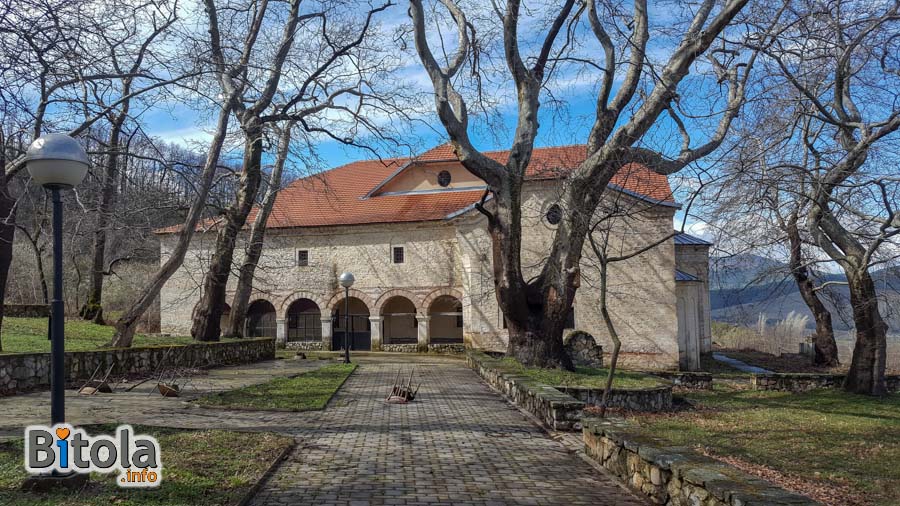
Built in 1834, the church shared the fate of the Trnovo church during the First World War and was completely destroyed. Its iconostasis was also removed during the war and later recovered. Today, together with the iconostasis from Trnovo, it is preserved in the Church of the Holy Virgin Mary in Bitola.
The Church of St. Demetrius was subsequently rebuilt and continues to serve the local Orthodox community.
Nearby is the former women’s monastery of St. George, founded in 1871. Although its residential buildings were destroyed during wartime, the surviving church remains a reminder of the monastery’s former importance.
Rotino – Into the Forests of Pelister
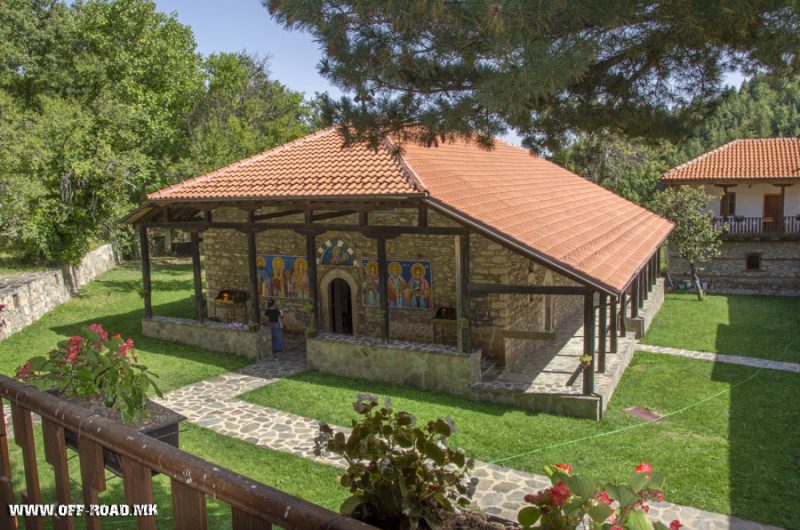
Continuing towards Capari village, the trail passes through Rotino, home to the Church of St. Nicholas and the Monastery of St. Elijah.
The Church of St. Nicholas was built in 1870 and restored after the First World War. Every year on December 19, its feast day, the church becomes a gathering place for worshippers celebrating its patron saint.
A particularly pleasant part of the route leads to the Monastery of St. Elijah. The path begins near the last houses of Rotino and winds through dense oak forest, gradually leading deeper into the peaceful surroundings of Pelister.
After approximately one kilometer, hikers reach the monastery at an elevation of 1,070 meters. The combination of forest, mountain air, and the quiet surroundings makes this a natural place to pause and enjoy the landscape.
Capari – Centuries of Monastic Tradition
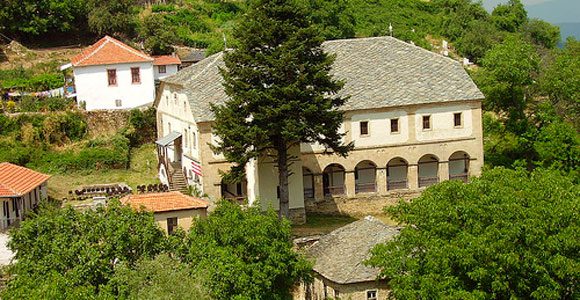
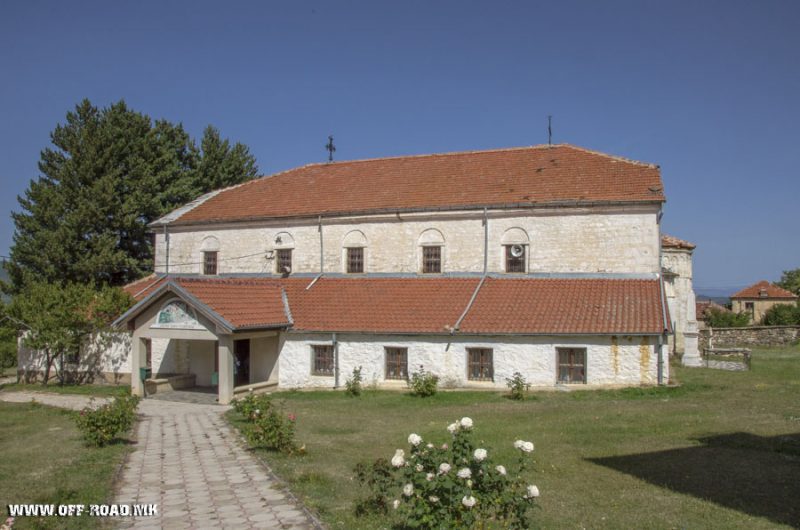
The first section of the trail concludes in Capari village, where visitors can explore the Monastery of St. Petka and the Church of St. George.
The Monastery of St. Petka dates back to the 16th century, while its present church was built in the 19th century. Historical records connect the monastery with the Ohrid Metropolitanate, while administratively it belonged to the Bitola district.
By 1724, the monastery had fallen into disrepair and was restored by a priest named Dionysius. Centuries later, a fire caused extensive damage to the complex, destroying its iconostasis, icons, and much of its interior inventory. Thanks to the efforts of the faithful, the damaged sections were subsequently restored.
The monastery church stands at the center of the complex, surrounded on three sides by the monastery quarters. Their interconnected verandas create a distinctive architectural ensemble.
The monastery is particularly lively on August 8, its feast day, when believers gather to celebrate St. Petka.
Capari’s religious heritage is complemented by the Church of St. George. Its foundations were laid by local residents on May 11, 1888. The church’s frescoes, completed in 1890, were created by Josif Radević from Lazaropole in the Debar region.
Malovište – A Village of Living Heritage
The second section of the trail takes visitors to Malovište, one of the most distinctive mountain villages in the Pelister region.
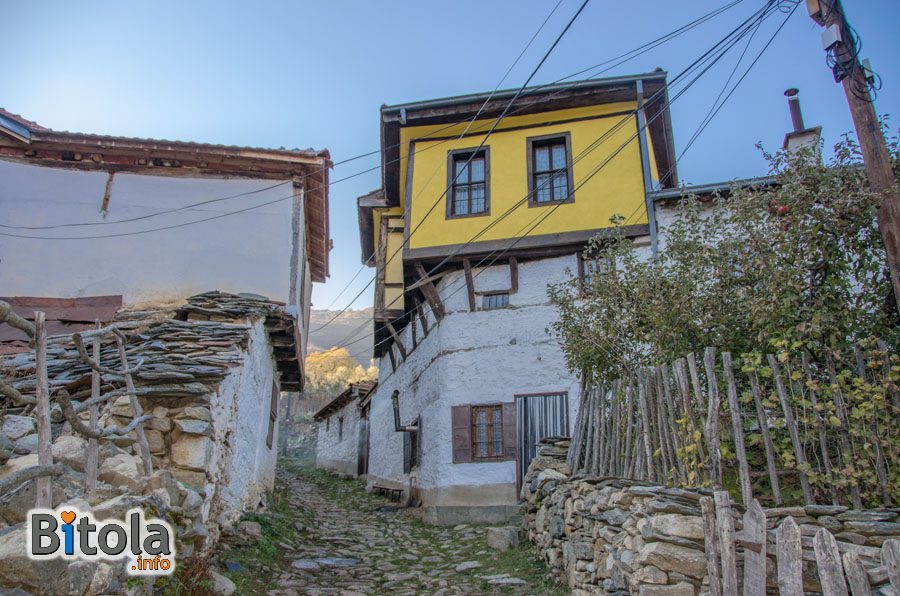
Surrounded by forests and high mountain landscapes, Malovište has preserved an exceptional collection of churches, monasteries, and traditional heritage. Walking through the village and its surroundings offers an opportunity to experience the connection between nature, faith, architecture, and the everyday life of generations of local inhabitants.
Monastery of St. Anne
Hidden among the beech forests southwest of Malovište is the Monastery of St. Anne, located at an altitude of 1,410 meters, approximately 2.5 kilometers from the village.
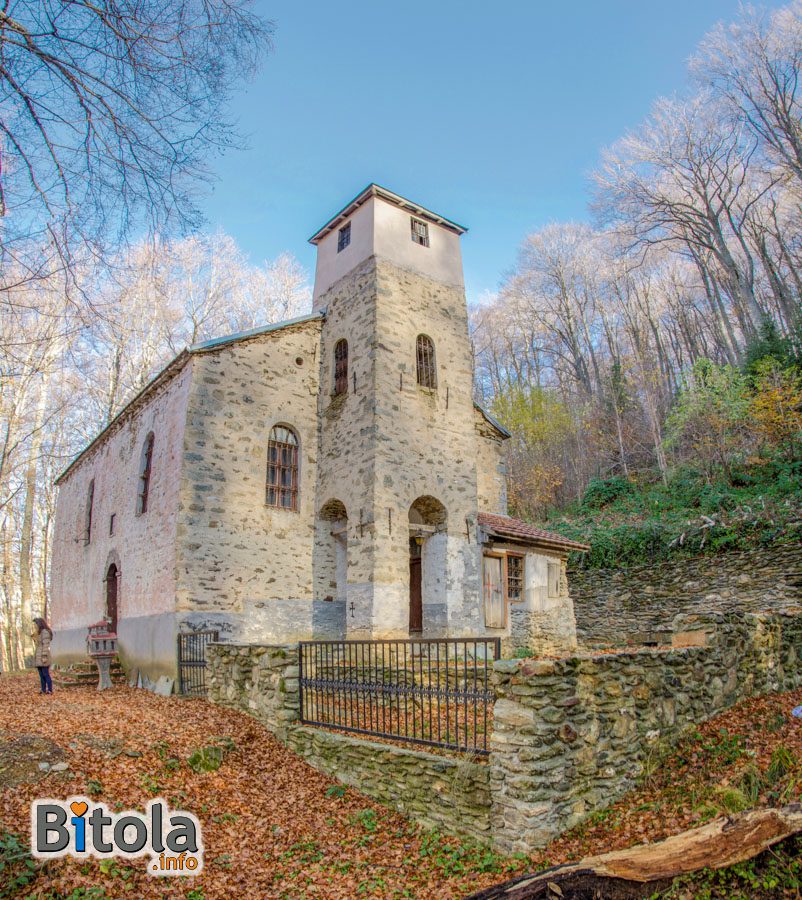
Historical sources indicate that the monastery existed as early as the mid-18th century. The present church was built in 1936, while the monastery quarters were constructed and expanded during the 20th century.
Dedicated to St. Anne, the mother of the Most Holy Virgin Mary, the monastery attracts worshippers from the Bitola and Prespa regions during its annual feast day.
For hikers, the monastery also offers a refreshing stop: a large fountain provides clear, cold mountain water flowing directly from the surrounding slopes.
Church of St. Petka
Back in Malovište, the trail continues to the Church of St. Petka, built in 1856 on the foundations of an earlier church believed to date from the 16th–17th centuries.
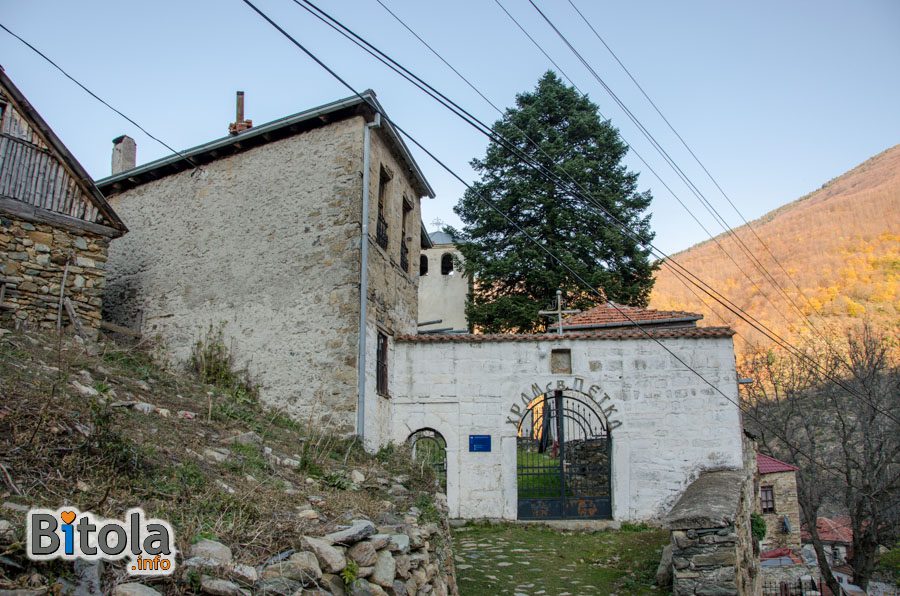
The church is an impressive example of traditional craftsmanship. Inside, visitors can admire its richly carved iconostasis, created in 1992 by the master Dimitri, as well as icons and frescoes produced by renowned iconographers.
One of the highlights of Malovište’s cultural heritage is the church’s permanent icon gallery, which contains hundreds of icons spanning approximately 400 years of artistic and religious tradition.
St. Spas – A Church Above the Mountains
For those looking to venture higher into the mountains, the trail leads towards one of the most spectacular locations on the route.
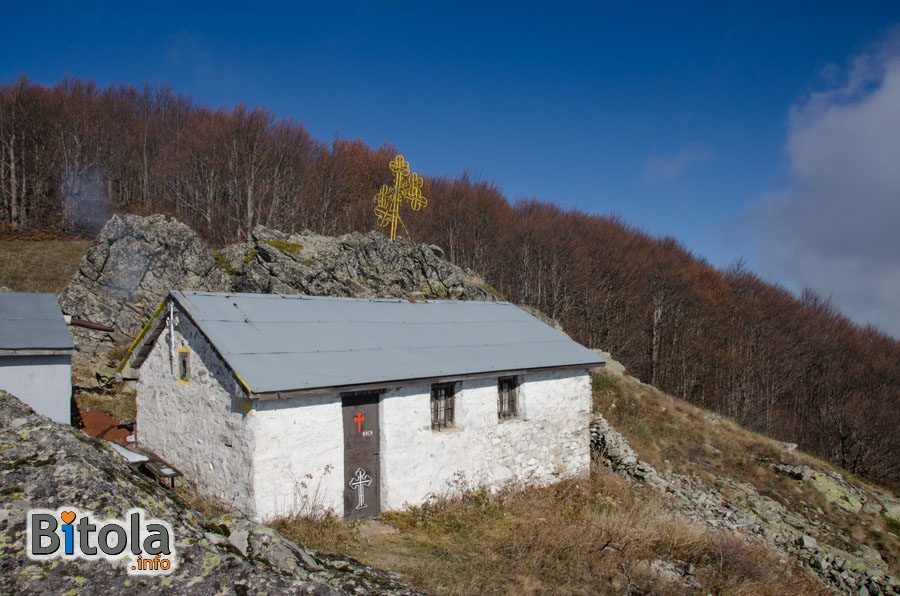
At an altitude of approximately 2,000 meters, beneath the peak known as Vrteshka on Baba Mountain, stands the small Church of the Resurrection of Christ – St. Spas.
Built by believers directly among the mountain rocks, this humble church occupies a remarkable setting high above the surrounding landscape. From the mountain ridge near the church, visitors can enjoy sweeping views towards Lake Prespa.
The feast of St. Spas follows the Orthodox movable calendar and is celebrated on Thursday, 40 days after Easter.
Walk Through History
The Churches and Monasteries of Pelister trail is an invitation to experience Pelister beyond its forests and mountain peaks.
Every village, church, monastery, and mountain path tells part of the story of the communities that have lived here, worshipped here, and preserved their traditions through centuries of change.
Whether you come for the hiking, the architecture, the history, the spiritual heritage, or simply the opportunity to explore the quieter side of Pelister, this route offers a memorable journey through nature, culture, and faith.
Explore the villages. Follow the mountain paths. Discover the sacred heritage of Pelister.
Don’t miss