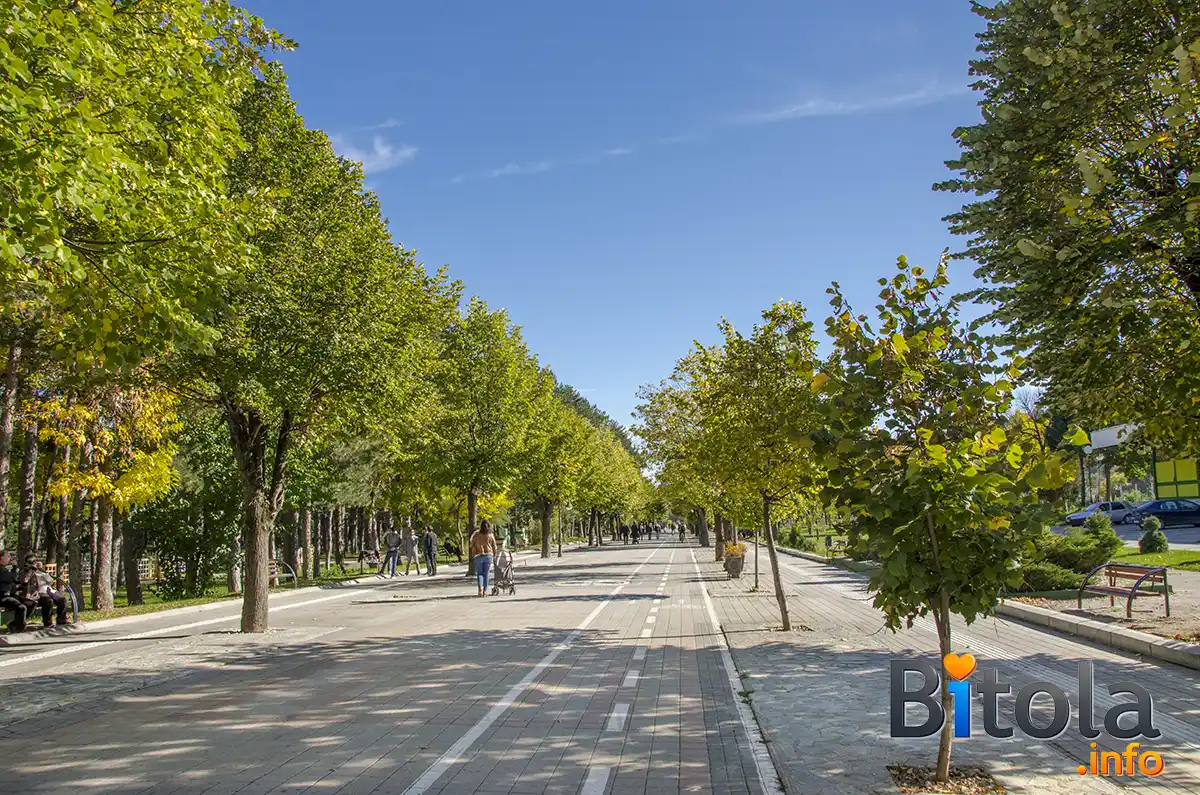
The City Park in Bitola is one of the most important places for rest, recreation and socializing in the city. Its history, however, is much older than its current purpose and testifies to the numerous changes that this space has undergone over the course of more than a century.
From a military training ground to a space with a new purpose
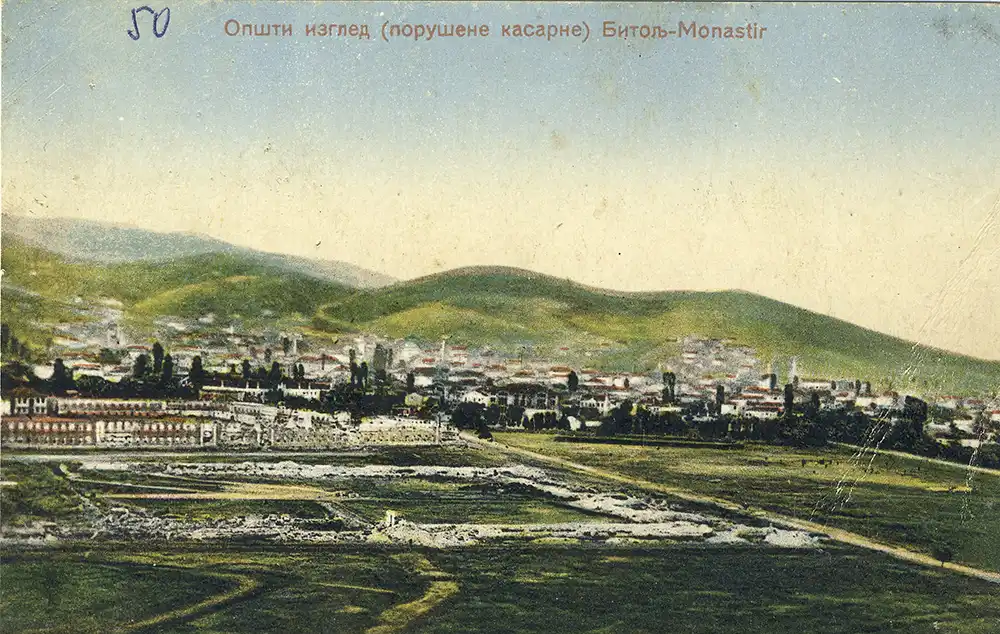
In the place where the City Park is located today, there was a military training ground during the Ottoman period. The area located on the road to Lerin, between the Railway Station and the large barracks, was the site of the first attempts to develop it, but mainly as a resting place for high-ranking civil servants and military personnel.
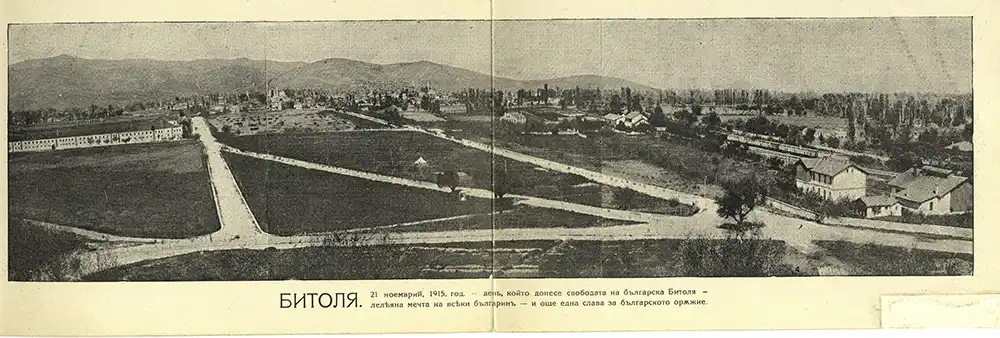
The First World War and the Tragic Explosion
During the First World War, the barracks were seriously damaged and largely destroyed. After the war, the area was used to store leftover ammunition, which was to be transported via the Railway Station.
On April 18, 1922, a catastrophic explosion of stored ammunition occurred, which posed a serious threat to the entire city and left lasting consequences. For this reason, even today, unexploded shells and other military ammunition are occasionally found during construction excavations in this part of Bitola.
Creation of the City Park
The formal creation of the park began in 1924, when the Municipal Board decided to unite the surrounding meadows and form a single public green area.
In the early 1930s, the systematic landscaping of the area began. The first seedlings were planted, and extensive drainage works were carried out to overcome the problem of swampy terrain.
In 1934, the first well and mechanical pump were built, ensuring a regular supply of water for the maintenance of the park. That same year, the park was named “Woodrow Wilson”, in honor of the American president, as an expression of gratitude for his efforts for Europe after the First World War.
In the following years, a large number of deciduous and evergreen trees were planted, and in 1938 the Municipality established a special Department of Parks, which took care of its professional maintenance.
Distinctive features of the park
In the period between the two world wars, the park gained its recognizable appearance through the construction of several significant features:
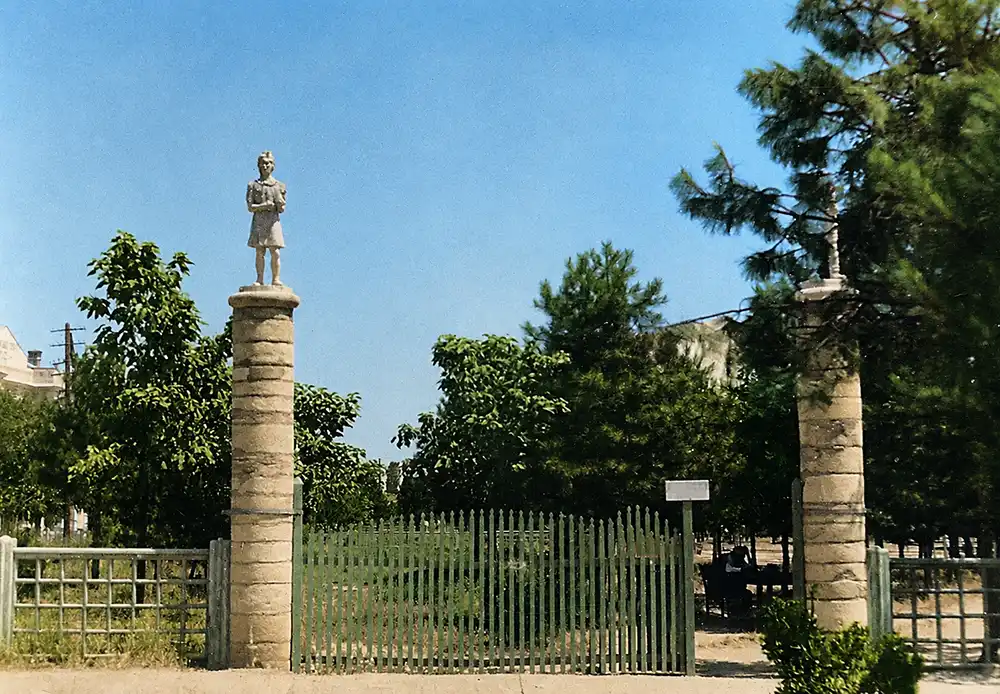
Decorative entrances – four decorative gates were built, two on the eastern and two on the western side.
The “Concrete” path – the main path was concreted and connected the barracks with the Customs House, which is why it became known among the people of Bitola as “Concrete”.
Public features – about 30 benches were installed, as well as a public toilet, designed by the municipal engineer Metodija Petković.
Cultural life – the park became one of the main places for entertainment and socializing, where concerts of the military orchestra were held every Wednesday afternoon and Sunday evening.
Pioneer Playground
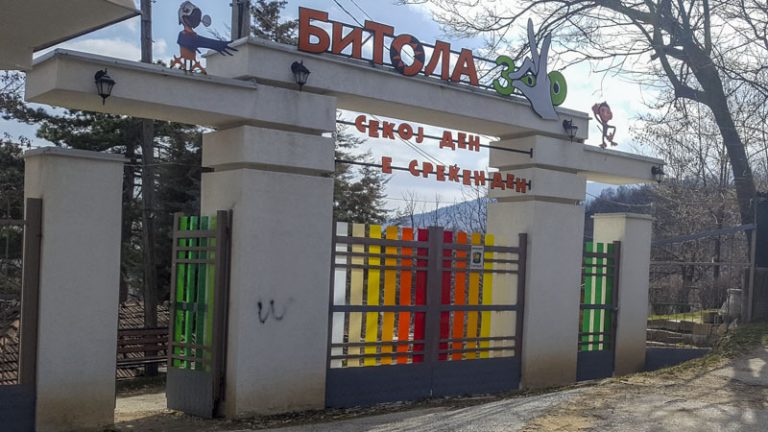
After World War II, the park was further enriched with the construction of the Pioneer Playground, designed by Petar Mačkić. On an area of about one hectare, children’s props, artificial streams and large murals, made by Bitola artists Tode and Mende Ivanovski, were built.
A particularly interesting historical detail is that the pedestals for the statues of the pioneer man and woman were made of stone columns taken from the demolished Portuguese synagogue in Bitola.
The City Park today
In the period after Macedonia’s independence, the City Park continued to develop and adapt to the modern needs of its citizens.
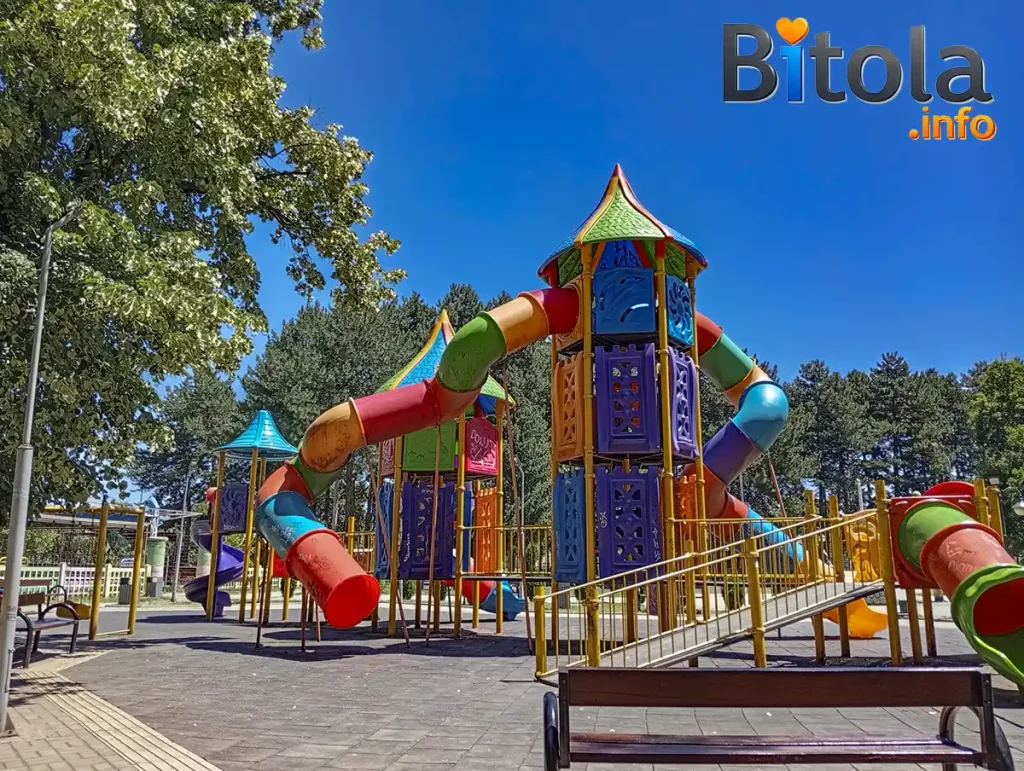
The Promenade and the area around the Railway Station have been renovated, new corners for rest and recreation have been built, and children’s facilities have been significantly expanded and renovated.
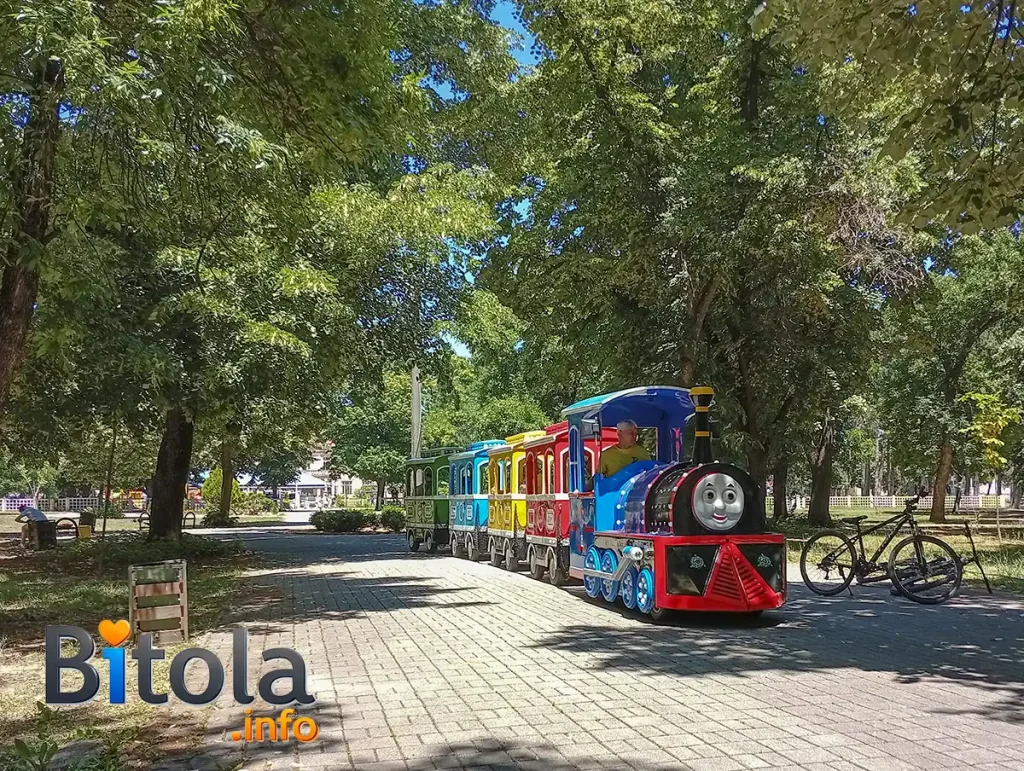
Since 2023, the favorite tourist train “Mecho” has been running through the park again, once again becoming one of the biggest attractions for the youngest visitors and a symbol of carefree walks through the largest green oasis in Bitola.