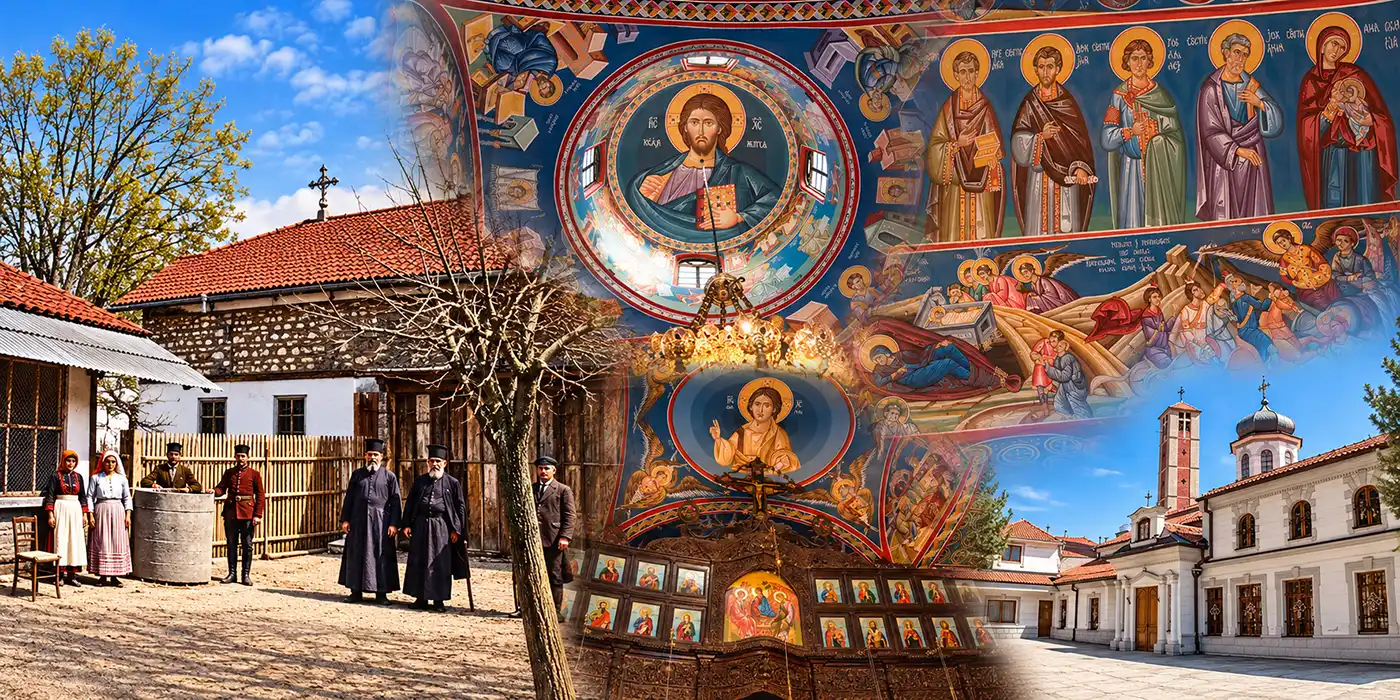
The Church of the Nativity of the Most Holy Mother of God, located on the right bank of the River Dragor, in the immediate vicinity of the primary school “Sts. Cyril and Methodius”, is one of Bitola’s most significant spiritual and cultural-historical monuments.
Contact Information
- Church: “Nativity of the Most Holy Mother of God” – Bitola
- Gjuro Djaković Street, no number – Bitola (Google maps…)
- Telephone: +389 47 236 287
- Website…
Built in 1870–1871 and consecrated in 1876, the church bears witness to the faith, perseverance, and determination of the local population to preserve its language, identity, and tradition.

A Church Built with Faith and Perseverance
The story of the church’s origins is closely connected with the historical circumstances in Bitola in the 19th century, when the construction of new Christian churches was subject to numerous restrictions and administrative obstacles. At that time, the city was an important commercial and craft centre, and Bitola’s guilds played a significant role in social and spiritual life.
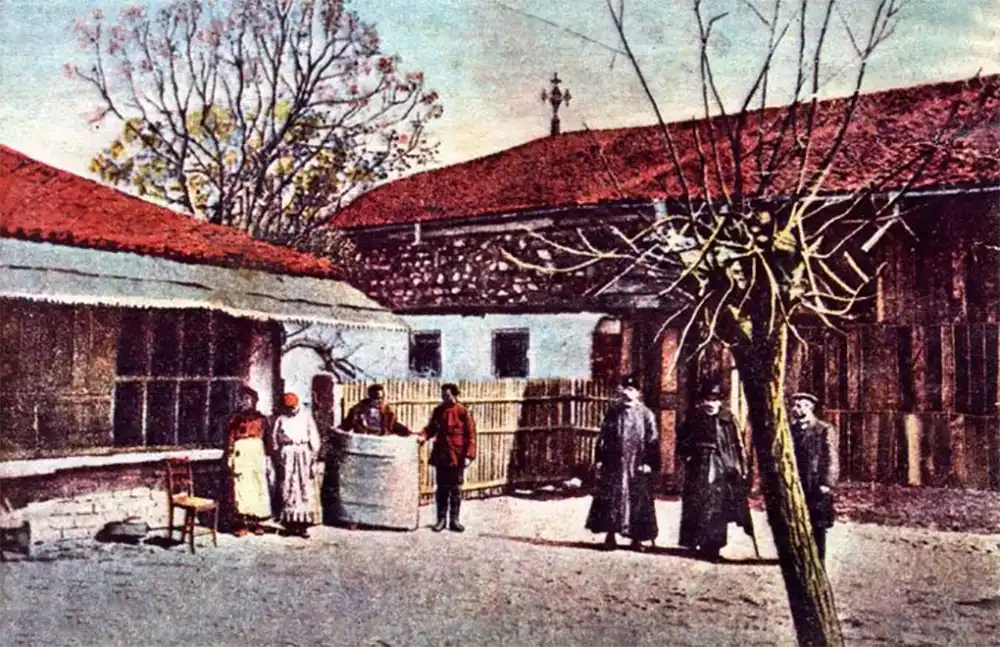
It was the craftspeople who, through their contributions and collective efforts, helped build a church in the city centre where services could be held in a language understood by the local population. Until then, services in the church “St. Demetrius” had been held in Greek, while the church “St. Sunday” was located on what was then the outskirts of the city.



Because of the obstacles to building a new church, the structure initially looked like an ordinary residential building. Only later was it extended and given its distinctive sacred form.
Today, the church has the form of a three-aisled basilica, with porches, upper galleries, and a dome influenced by the Baroque style.
Although the church stands out at first glance for its simple and dignified exterior, its true beauty is revealed inside, where spirituality, art, and history intertwine in a unique setting.
The Iconostasis – An Artistic Treasure with an Unusual History
One of the church’s greatest treasures is its magnificent wooden iconostasis, adorned with elaborate carvings and details that reveal the skill of traditional Macedonian woodcarvers. Based on its stylistic features, the carving is attributed to the renowned Mijak masters, celebrated for their exceptional woodworking skills and the creation of sacred works of art.

The story behind the iconostasis is particularly interesting. Parts of it are associated with the iconostases from the churches “St. Mary” in the village of Trnovo and “St. Demetrius” in the village of Magarevo, which were severely damaged during World War I.

Valuable church objects were also endangered during the wartime destruction, and there was an attempt to take parts of the iconostases to Bulgaria. The carvings were saved, however, and later found a home in the Bitola church, where they still testify to the rich spiritual and artistic heritage of the villages beneath Pelister.
In this way, the Church of St. Mary also became a guardian of part of the cultural heritage of the surrounding villages, bringing together within its walls works of art that survived one of the region’s most difficult historical periods.

A Restored Church in the Heart of Bitola
During the 20th and early 21st centuries, the church went through periods of damage, maintenance, and restoration. More recent restoration and renovation work has refreshed the interior, while the frescoes and church furnishings have helped preserve and enrich its spiritual atmosphere.
Today, the church remains an active place of worship and an important site for Orthodox Christians. Services are held here regularly, and the church has special significance for family and religious celebrations such as baptisms and weddings.




Why Visit the Church of St. Mary?

Visiting this church offers an opportunity to discover another side of Bitola—a city of traditional crafts, rich cultural traditions, and diverse spiritual heritage.

As you explore the iconostasis, carvings, and interior of the church, you will discover a story connecting Bitola’s guilds with the master craftsmen of the Mijak region and the historical events that shaped the area. Its location beside the Dragor River makes it easy to include in a walk through the city centre, along with the city’s other important religious and cultural-historical sites.

The Church of St. Mary is more than a place of prayer—it is a living monument to Bitola’s collective memory. Its story speaks of community, perseverance, and love for one’s heritage, while its iconostasis is a precious testament to the artistic skill and cultural richness of the past.
For every visitor wishing to get to know Bitola more deeply, this church is an important stop on a journey through the city’s history, art, and spiritual traditions.
Read more: 10 Oldest Churches in Macedonia | Frescoes, Stone, and Centuries of History
Photo Gallery